Childhood Vaccinations
Are Your Child’s Vaccines Up to Date?
Keeping your child up to date with their vaccinations is one of the most effective ways to protect them against serious and sometimes life‑threatening illnesses. Vaccines help build your child’s immunity early, keeping them and others safe as they grow.
Why Childhood Vaccinations Matter
Children can catch and spread illnesses like measles, whooping cough, and meningitis very easily. These infections can lead to:
- Hospital stays
- Long‑term health problems
- Serious complications
- In rare cases, death
Vaccinations are free, safe, and thoroughly tested, and they offer the best protection against these diseases. Research from around the world continues to show that immunisation is one of the safest ways to protect your child’s health.
The NHS Childhood Vaccination Schedule
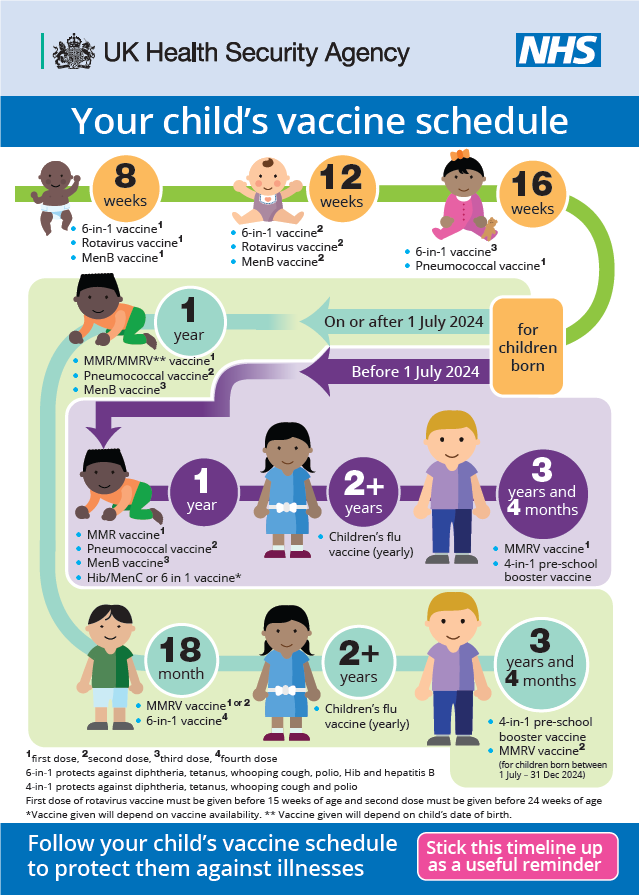
Your child will be invited for vaccinations at several stages from birth to school-age. This includes protection against:
- Measles, mumps and rubella (MMR)
- Meningitis B (MenB)
- Pneumococcal infections
- Diphtheria, tetanus and whooping cough
- Polio
- Rotavirus
- Seasonal flu (every year)
- Pre‑school booster vaccines
For the full NHS vaccination schedule and details of what each vaccine protects against, visit:
👉 NHS Vaccinations and When to Have Them
Your child’s schedule may vary depending on their date of birth. If you’re unsure, our team can help.
Missed a Vaccine? Don’t Worry — You Can Catch Up
If your child has missed a vaccine, most can still be given later. Check your child’s Red Book, or contact us and we’ll help you bring them up to date. Staying on schedule gives the best protection, but catching up at any time is important.
If you’re unsure or think your child may have missed a dose:
📘 Check their Red Book
📞 Contact the practice to check their records
📅 Book any outstanding vaccinations with the nursing team
Our team is here to support you and ensure your child gets the protection they need.
Need More Information
Visit the NHS vaccine hub for trusted, easy‑to-understand guidance on every childhood vaccine:
👉 www.nhs.uk/vaccinations
Check if Your Child’s Vaccinations Are Up to Date
Important: Baby Immunisations
Important: Pre School Immunisations
Childhood Vaccinations – Parent FAQ
1. Why are childhood vaccinations important?
Vaccinations protect children from serious illnesses such as measles, whooping cough, meningitis and polio. These conditions can spread easily and may lead to hospital stays, long‑term health problems, or, in rare cases, be life-threatening. Vaccines help your child build strong immunity early in life.
2. Are vaccines safe?
Yes. All NHS vaccines are thoroughly tested and monitored for safety. Like any medication, vaccines can cause mild side effects (such as a sore arm or mild fever), but serious reactions are extremely rare. The benefits of vaccination far outweigh the risks.
3. What vaccines does my child need and when?
Children receive vaccines from 8 weeks old through to school age. These protect against conditions including:
- Diphtheria, tetanus, whooping cough
- Polio
- Hepatitis B
- Hib
- Rotavirus
- Measles, mumps and rubella (MMR)
- Pneumococcal disease
- Meningitis B
- Seasonal flu (given yearly)
Your child’s Red Book includes their personal schedule. If you’re unsure, contact the practice.
4. What if my child misses a vaccine?
Don’t worry — most vaccines can still be given later. If you think your child is behind, please contact us and we’ll help you catch up.
5. How do I know if my child is up to date?
You can:
- Check their Red Book
- Contact the GP practice to review their records
- Ask at your child’s next appointment
6. Are the vaccinations free?
Yes. All routine childhood vaccinations offered by the NHS are free.
7. My child has a cold. Can they still have their vaccine?
Usually, yes. Minor illnesses like colds or coughs are not a reason to delay vaccinations. If your child has a high fever or seems very unwell, you may be advised to rebook.
8. What if I’m worried about side effects?
Mild side effects (such as a fever or soreness at the injection site) are common and usually short‑lived. Serious reactions are very rare. If you have any concerns before or after a vaccine, our team is here to help.
9. Will my child get more vaccines when they start school?
Yes. Children are offered a pre‑school booster around 3 years 4 months old, and further routine vaccinations are offered at school later.
10. Where can I find more reliable information?
The NHS has a clear, trusted guide to every childhood vaccine, including how they work and what to expect:
👉https://www.nhs.uk/vaccinations/nhs-vaccinations-and-when-to-have-them/
Page created: 19 March 2026